

Nanjing Institute × Rushi Spice Joint Release: The Origins and Analytical Methods ofNumbing and Aromatic Compounds in Sichuan Pepper
南京所 x 如实联合发布:椒中麻味物质和香味的来源及检测方法
Sichuan pepper originated in China and is a traditional spice, ranked first among the classic “Thirteen Spices.” Its distinctive numbing aroma is one of the hallmark representations of “the taste of China”—irresistible to many food lovers, yet daunting for those experiencing it for the first time.
As research on the chemical basis of Sichuan pepper’s flavor and related standardization efforts continue to advance, we have now established a relatively comprehensive set of testing standards for the numbing and aromatic compounds of Sichuan pepper.
What is "Ma" in "Mala"?
The “numbness” of Sichuan pepper and the “spiciness” of chili peppers do not fall within traditional taste categories; rather, they are complex tactile sensations. Spiciness is characterized by stinging and heat, while numbness is essentially a combined sensory experience caused by stimulation of the oral mucosa, producing numbness, tingling, trembling, and prickling sensations, often accompanied by warmth, salivation, and a slight astringency.
Research shows that the tactile response of Sichuan pepper’s numbing sensation is strongly correlated with mechanical vibrations at a frequency of 50 Hz, providing a physiological basis for quantifying the numbing effect. For this reason, Sichuan pepper’s numbness is also referred to as a “50 Hz tremor-like pain sensation.”
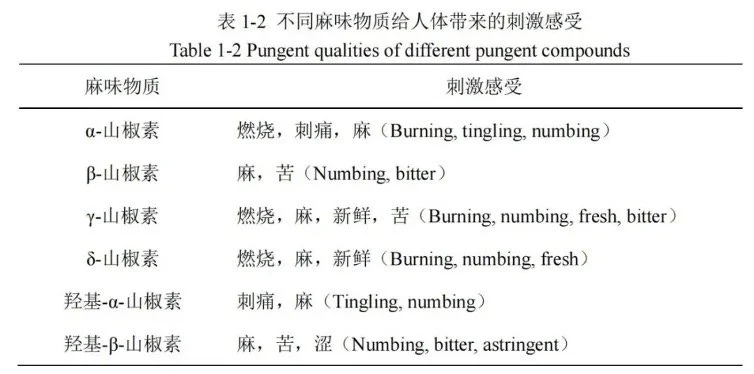
Pungent qualities of different pungent compounds
Modern research on the chemical basis of flavor shows that the numbing sensation of Sichuan pepper primarily comes from a group of natural unsaturated fatty acid amides found in its pericarp, collectively known as sanshool amides. Among them, hydroxy-α-sanshool is the signature compound responsible for the core numbing effect.
To date, more than 30 numbing-active amide compounds have been isolated and identified from Sichuan pepper, including α-sanshool, β-sanshool, γ-sanshool, and other homologues. Their structural differences directly influence the intensity, persistence, and sensory characteristics of the numbing sensation.
What makes up the aromatic profile of Sichuan Pepper?
The aroma of Sichuan pepper is primarily determined by its volatile essential oil components. These compounds are secondary metabolites formed during the plant’s growth, characterized by high volatility and a distinct aromatic profile. The chemical composition of Sichuan pepper essential oil is complex, with more than 100 identified components spanning terpenes, alcohols, esters, aldehydes, ketones, ethers, and other categories.
Among them, d-limonene and linalool are the two major aromatic compounds: d-limonene contributes a citrus-like freshness, while linalool imparts a soft floral note.
Additional compounds such as linalyl acetate, sabinene, and myrcene further enrich the aroma’s complexity and layers.
It is worth noting that both the content and composition of Sichuan pepper’s essential oil are influenced by multiple factors, including place of origin, soil physicochemical properties, climate conditions, cultivar genotype, and harvest period.
Generally, green Sichuan pepper has a higher essential oil content than red Sichuan pepper, and the two differ significantly in the proportion of characteristic compounds such as eucalyptol — a key reason for the distinct aromatic profiles between the two varieties.
How do we quantify and standardize the "Ma" properties of Sichuan Pepper?
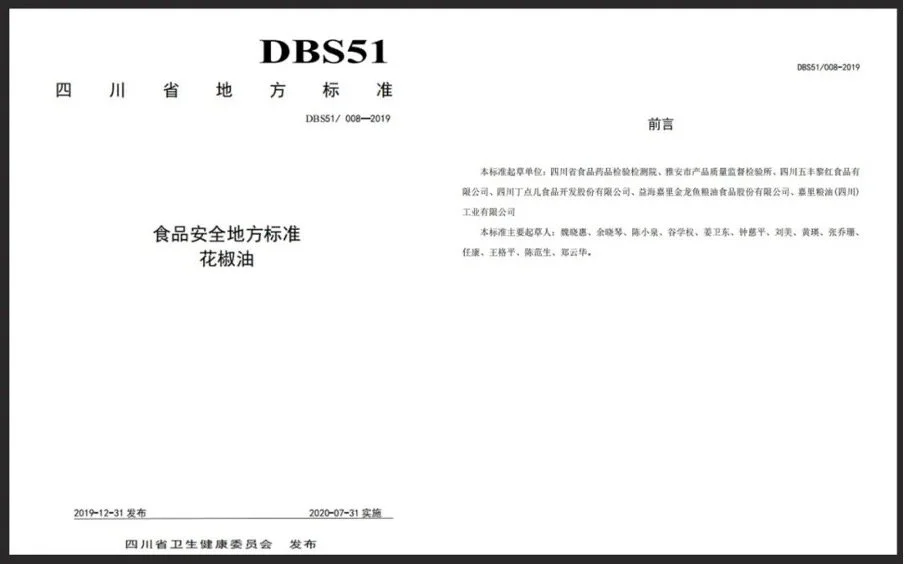
Food safety local standard (Sichuan Pepper oil)
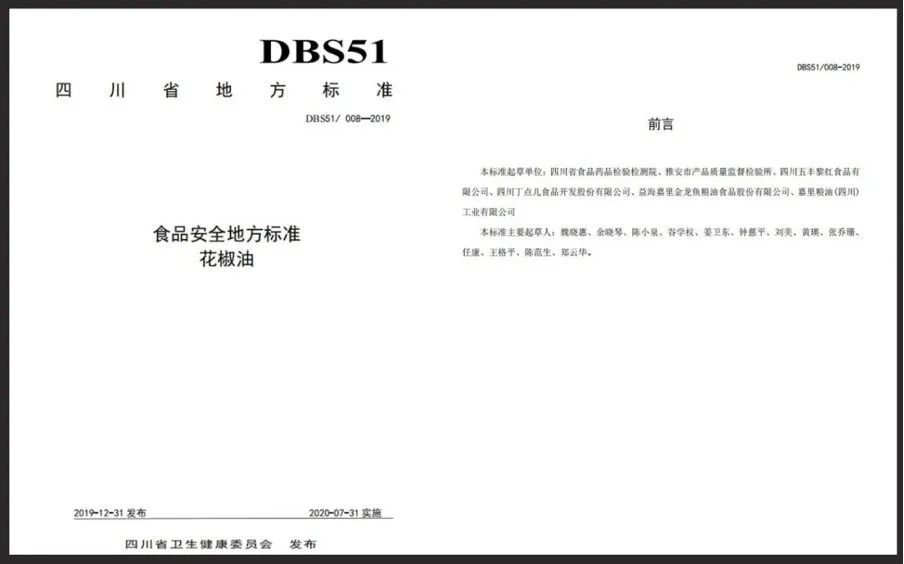
In 2019, the Sichuan Provincial Health Commission approved and issued the Local Food Safety Standard for Sichuan Pepper Oil, which included, in its appendix, a method for determining the content of amide compounds in Sichuan pepper oil — filling a gap in the testing standards for sanshool-type amides.
In June 2020, the All China Federation of Supply and Marketing Cooperatives approved and released the industry standard Determination of Total Sanshool Content in Sichuan Pepper and Sichuan Pepper Products (GH/T 1291-2020). This standard proposes two technical approaches: UV spectrophotometry and high-performance liquid chromatography (HPLC). The UV spectrophotometric method allows rapid detection based on the characteristic absorption peaks of amide compounds, while HPLC offers higher precision and is suitable for quantitative analysis, providing diversified options to meet testing needs in different contexts.
Food safety local standard (Sichuan Pepper oil)
In 2022, as research into the mechanisms behind numbing taste advanced, the hydroxy-α-sanshool reference standard developed by the Sichuan Institute for Food and Drug Control received national approval, laying the foundation for precise quantification of individual numbing compounds. With support from the China Chamber of Commerce for Import and Export of Foodstuffs, Native Produce and Animal By-products, our company collaborated with relevant organizations and research institutes to conduct multiple rounds of validation testing, resulting in the group standard Determination of Numbing Compounds in Sichuan Pepper and Its Products (T/CFNA 6503-2022). This standard enables specific detection of the key numbing-active compounds, further improving the accuracy and comparability of testing results.
Detection of Essential Oils in Sichuan Pepper
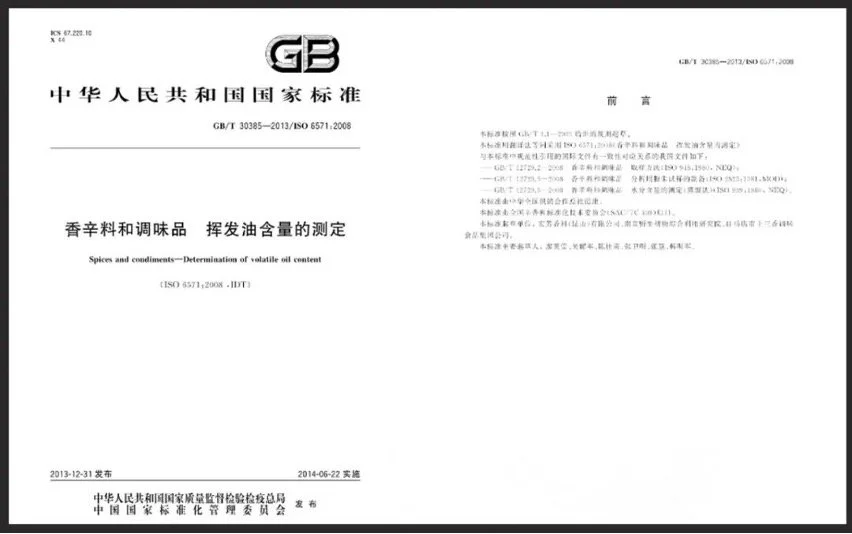
Compared with numbing compounds, the analytical techniques for Sichuan pepper essential oils are more mature. Within the industry, two national standards serve as the primary technical references. GB/T 17527, Determination of Essential Oil Content in Pepper, is the most widely used method in both research and production. Based on the principle of steam distillation, this method heats the sample so that the essential oils evaporate together with steam, which are then condensed, collected, and measured. It offers advantages such as simple equipment requirements, convenient operation, and low testing cost, making it suitable for rapid, high-throughput analysis in industrial settings.
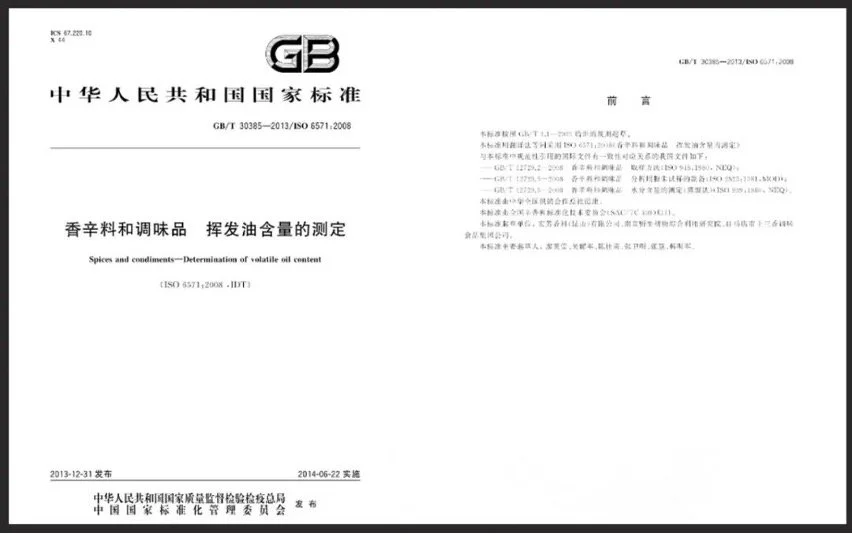
GB/T 30385-2013, Spices and Seasonings — Determination of Essential Oil Content, also uses steam distillation, but imposes stricter requirements on reagent selection and operational parameters. Some reagents are subject to governmental control and require formal procurement filings. The testing process is relatively more complex, so this method is mainly used in professional laboratories for high-precision analysis and is rarely adopted for routine in-house testing by enterprises.
In summary, research on Sichuan pepper flavor compounds has achieved notable progress. The standard systems for detecting numbing compounds and essential oils have been continuously refined, providing crucial technical support for standardized production, full-process quality control, and market circulation within the Sichuan pepper industry. Looking ahead, as analytical technologies advance and industry needs evolve, Rushi will continue collaborating with experts to promote the development of more scientific and unified national standards, ensuring high-quality growth for the Sichuan pepper sector.
-----------------------------------------------------------------------------------------------------------
The original content (in Chinese) is jointly released by Rushi Spice 如实香料 and the Nanjing Institute of Wild Plant Comprehensive Utilization under the All China Federation of Supply and Marketing Cooperatives (referred to as “Nanjing Institute”) 中华全国供销合作总社南京野生植物综合利用研究所(简称“南京所”).
As the secretariat unit of the National Technical Committee for Standardization of Spices, the Nanjing Institute has joined forces with Rushi to officially launch the “Spice Exploration” content series. Leveraging both parties’ strengths in spice resource development, technological innovation, and industrial applications, this series will focus on uncovering the potential of spice-plant resources and decoding the secrets behind flavor innovation. Through a professional scientific lens, it will present cutting-edge research, integrating sensory experience with scientific value to create flagship content that combines academic depth with practical industry guidance. Stay tuned!
Translation by Rushi Spice
Link to original article (Chinese):
https://mp.weixin.qq.com/s/VqRUf7CDa2CcNSUauvMEwQ?scene=1